
Boring · Rough Boring
Rough Boring Heads: Bridge Type and Damped Shank Bars
A rough boring head removes heavy stock before a finish bore. Winvera has two styles. Use a bridge rough boring head for large housings in the Ø150–352 mm range. Use a one-piece damped shank-type bar for Ø33–153 mm, in L/D 7 or 10. Both are built around a damped body so the cut stays quiet and the insert can take a heavy cut. Standard shank-type bars use a BT50 interface; other interfaces are quoted on request.
- Bridge & shank typeØ33–352 mmL/D 7 & 10BT50 interface
Click any image to zoom into the cutting head. Use the arrows or dots to switch images.
How to choose a rough boring head
Start with the finished bore diameter and the stock to be removed. Then choose the body style:
- Ø33–153 mm: choose a shank-type rough boring bar. Pick L/D 7 or 10 from the table to match the reach you need.
- Ø150–352 mm: choose a bridge rough boring head. The bridge carries two insert holders across a large bore, which is typical on turbine, valve, and gearbox housings.
- Ø150–153 mm is in both ranges. Choose by reach and the housing: use a shank-type bar when you need L/D 7 or 10 at this diameter, or a bridge head on a large housing. If you are unsure, send the diameter and the unsupported reach and we will quote the fit.
- Confirm the spindle interface before you order. BT50 is standard on the shank-type bars; other interfaces and diameters can be quoted.
The tables below list the standard models. Do not treat a model row as cutting data. Insert grade, feed, and speed still depend on the workpiece and the machine.
Type 01
Bridge Rough Boring Head
Ø150–352 mm. The bridge carries two insert holders across a large bore — rough and finish in fewer passes on turbine, valve and gearbox housings.
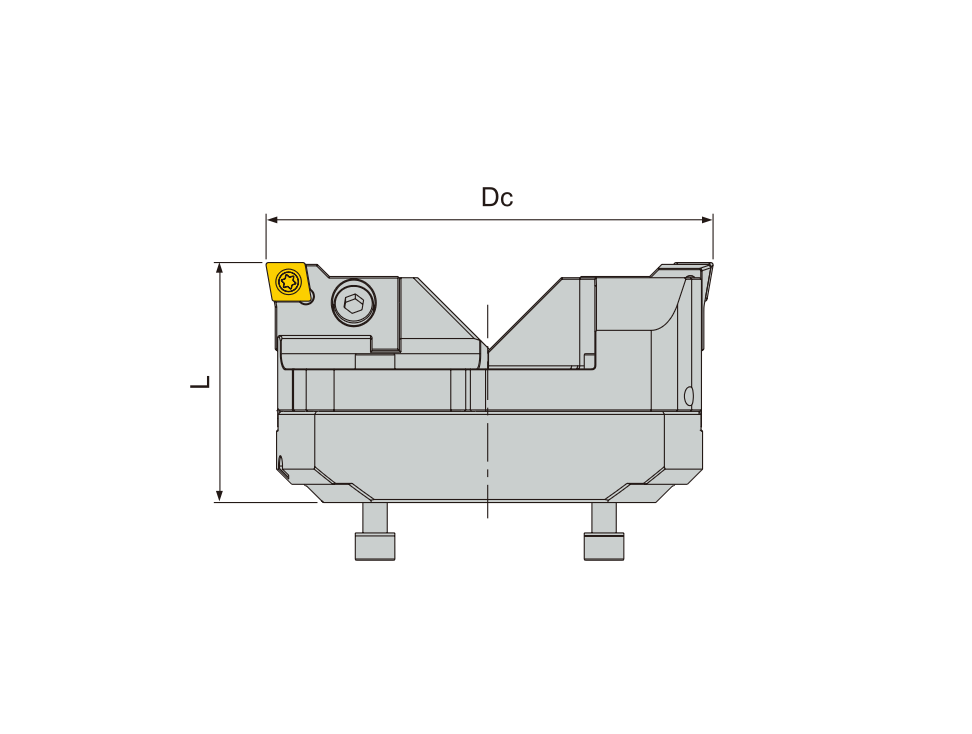
Models & parameters
| Model | Boring range Dc (mm) | L (mm) | Spindle interface | Insert holder |
|---|---|---|---|---|
| WLR150-202 | 150–202 | 80 | 32 | L90A D150.CC12 |
| WLR200-252 | 200–252 | 80 | 32 | L90A D150.CC12 |
| WLR250-302 | 250–302 | 80 | 32 | L90A D150.CC12 |
| WLR300-352 | 300–352 | 80 | 32 | L90A D150.CC12 |
Other diameters on request. Weight deliberately not listed — ask for a certified drawing.
Type 02
Shank-Type Rough Boring Bar (Integral)
Ø33–153 mm, L/D 7 and 10. One-piece damped body on a BT50 taper — the heaviest stock removal without chatter. Fig A and Fig B refer to the two body forms in the drawing above.
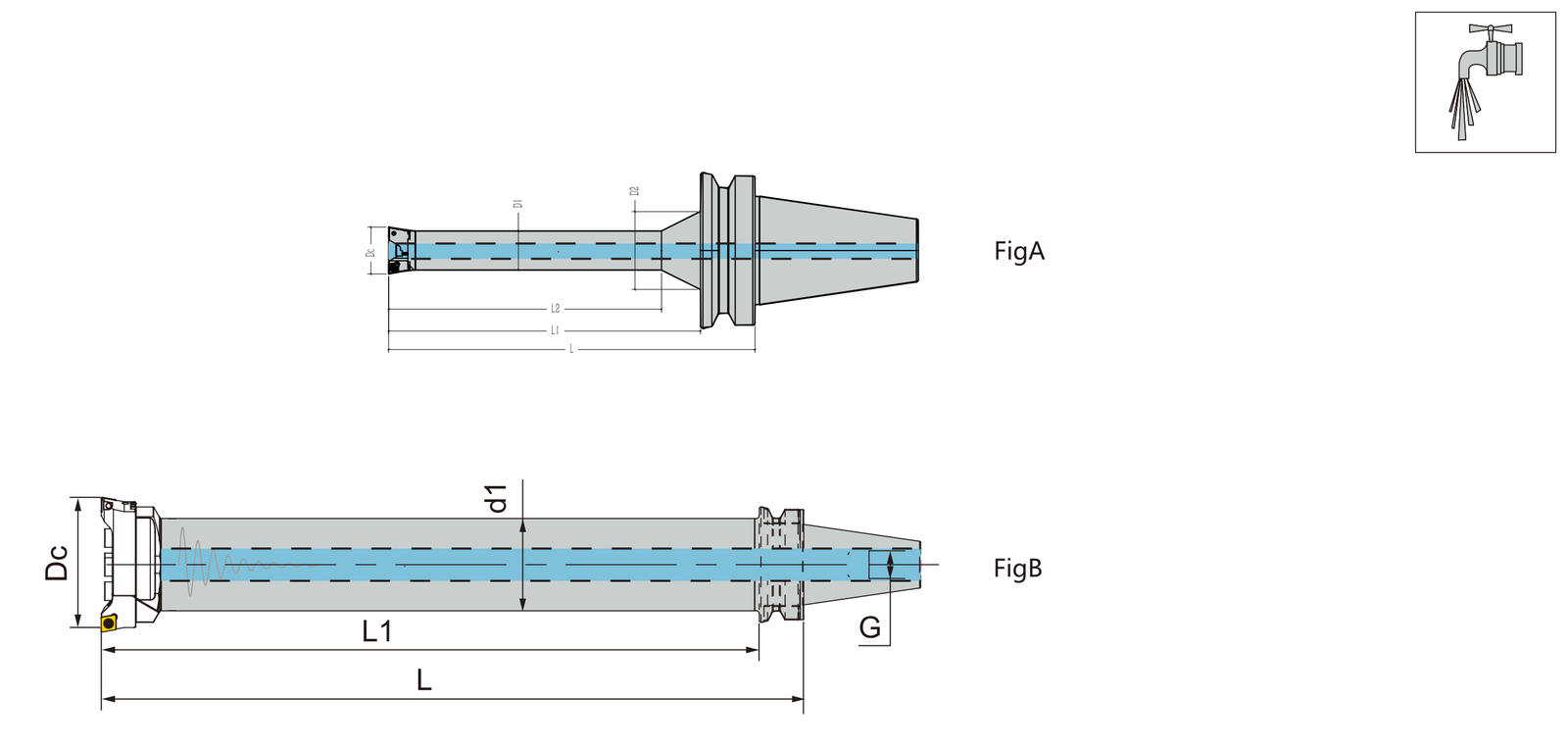
Models & parameters
| Model | Boring range Dc (mm) | D1 (mm) | L (mm) | L1 (mm) | L/D | Insert holder | Fig |
|---|---|---|---|---|---|---|---|
| WLR3341-295 | 33–41 | 32 | 294 | 256 | 7 | C90A D033-041.C | A |
| WLR3341-358 | 33–41 | 32 | 358 | 320 | 10 | C90A D033-041.C | B |
| WLR4155-358 | 41–55 | 40 | 358 | 320 | 7 | C90A D041-055.C | A |
| WLR4155-438 | 41–55 | 40 | 438 | 400 | 10 | C90A D041-055.C | B |
| WLR5570-388 | 55–70 | 50 | 388 | 350 | 7 | C90A D055-070.C | B |
| WLR5570-538 | 55–70 | 50 | 538 | 500 | 10 | C90A D055-070.C | B |
| WLR7090-479 | 70–90 | 63 | 479 | 441 | 7 | C90A D070-090.C | B |
| WLR7090-668 | 70–90 | 63 | 668 | 630 | 10 | C90A D070-090.C | B |
| WLR90110-598 | 90–110 | 80 | 598 | 560 | 7 | C90A D090-110.C | B |
| WLR90110-838 | 90–110 | 80 | 838 | 800 | 10 | C90A D090-110.C | B |
| WLR110133-598 | 110–133 | 80 | 598 | 560 | 7 | C90A D110-133.C | B |
| WLR110133-838 | 110–133 | 80 | 838 | 800 | 10 | C90A D110-133.C | B |
| WLR133153-598 | 133–153 | 80 | 598 | 560 | 7 | C90A D133-153.C | B |
| WLR133153-838 | 133–153 | 80 | 838 | 800 | 10 | C90A D133-153.C | B |
BT50 taper interface as standard. Other interfaces quoted on request.
Enquire about a rough boring head
To quote a Winvera rough boring head, send:
- required boring range (mm) and the stock to be removed
- L/D or the unsupported reach
- spindle interface
- workpiece material and the machine
- whether a finish bore follows this cut, and any tolerance or surface requirement
Email sales@winveratools.com.
Rough boring head questions
What is a rough boring head used for?
A rough boring head takes heavy stock out of a bore so a finishing tool can hold the final size and surface. It is not a substitute for a fine boring head when the tolerance is tight.
When should I use a bridge head instead of a shank-type bar?
Use the shank-type bar in the Ø33–153 mm range, at L/D 7 or 10. Use the bridge rough boring head when the bore is in the Ø150–352 mm range and you need two insert holders across a large housing. Ø150–153 mm sits in both ranges: choose by reach or housing type, or send the diameter and overhang with your enquiry.
What spindle interface do the shank-type bars use?
BT50 is standard. Other interfaces are quoted on request. Confirm the interface and the insert holder when you enquire.
What should I include in an enquiry?
Send the boring range, reach or L/D, spindle interface, workpiece material, and whether a finish pass follows. A certified drawing can be provided for the selected model; weights are quoted on request and are not listed in the tables.